Blog
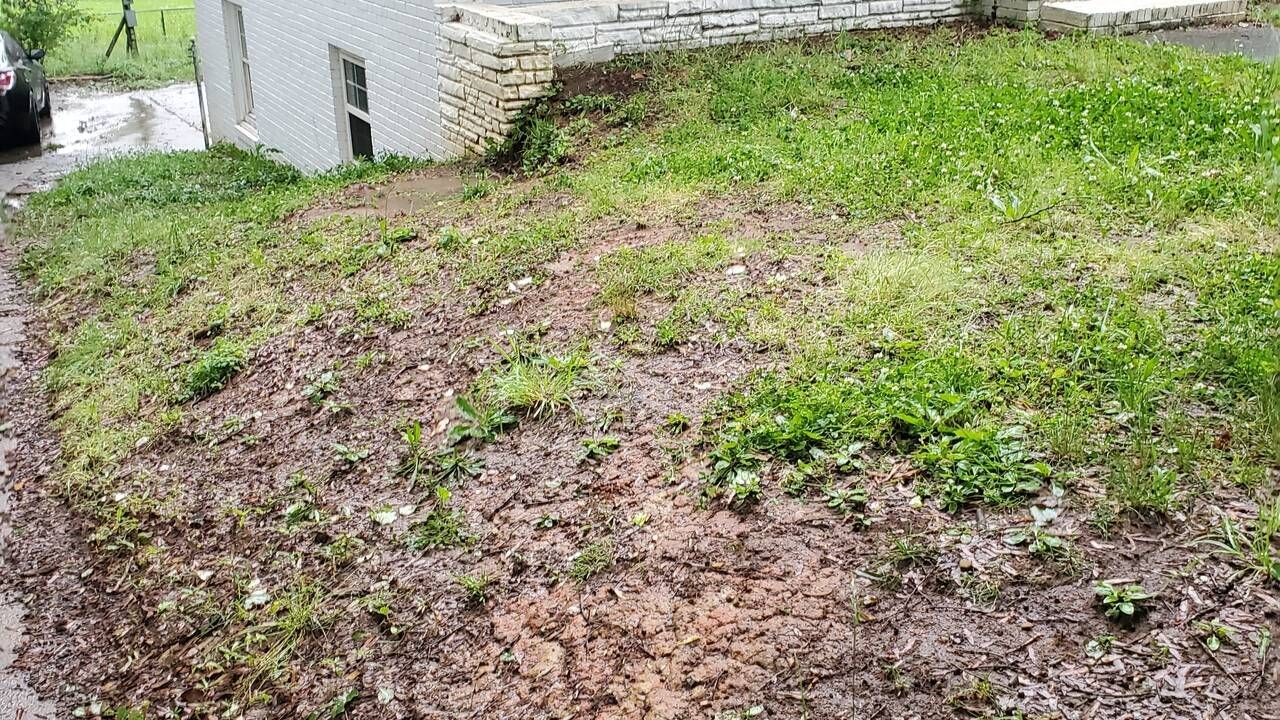
How many homes or buildings have you seen, that do not have gutters? I see so many buildings and homes that do not have gutters. This is not good. The purpose of gutters is to divert the water from the roof and channel the water from the roof to downspouts and get the water away from the foundation of the home. We do not want to have water dropping to the foundation of any home or building. Homes without gutters and downspouts create water damage that drops to the foundation of the building and this can create water damage issues to the foundation of the home as well as attract Termites as well as create Mold Removal issues that you do not want or need. Both of these issues cost money to correct. Another thing that homes that do not have gutters create are soil erosion to the yard. What is the purpose of gutters? The purpose of gutters is to divert the water away from the home with downspouts and also add downspout extensions. The farther that you can get the water away from the home, the better off you will be. Why do some homes or buildings not have gutters? Some people think by not having gutters that it will save them money. Well, it does initially save you money but not long term. Long term, it can and does create so many issues. Do people not see or understand the value of having gutters and if not, why do they not see the importance of having gutters, attached to buildings? When you think of gutters, think of a vessel that moves water away from the roof and onto a channel that diverts water away to down spouts to get the water away from the building, as quickly as possible. My name is David Snell and I am the owner and operator of Executive Restoration LLC. I have been in business since 1987 and I am passionate about what I do and offer. My expertise is Water Damage and Water Removal and Mold Inspections and Mold Removal. David Snell www.executiverestoration.com 704.545.0098
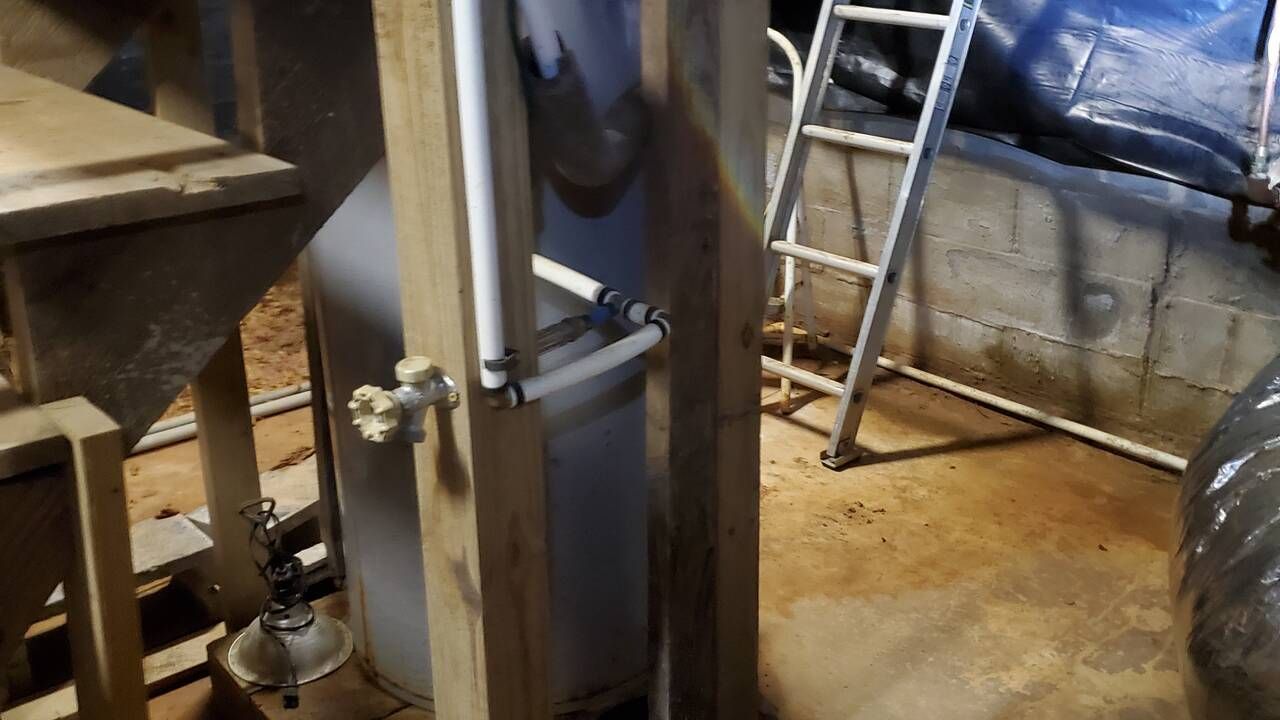
What kind of issues, do you see from the attached and above photo? Do you see Water Intrusion Issues? Do you see Water Damage that has continued, to enter the basement? Correct the outside of the home from water issues and then I would suggest sealing the basement walls and floor. Of course, before you do any sealing of walls and floors, make sure you clean, before you seal anything. Do you see Water Heater Issues? The water heater, from the photo, has either not been maintained or it is very old. How water heaters need to be drained and flushed, at least once a year. Make sure you turn off the power to the hot water heater first, before you do any cleaning or flushing to it. You can drain the water heater first by using a garden hose and getting the water heater drained and flushed. Everything gets dirty. Everything needs a good cleaning. Notice, the rust or clay staining on the water heater? Do you notice organic growth issues? Would a basement like this concern you, if you were buying or selling the house? Should it concern the buyer or seller? Do you notice a dirty basement? When you are selling a home, make sure the basement is clean as well as organized and take care of any water damage or mold, that you might have. This can be a big turn-off to someone, who is wanting to buy a home. When we have water intrusions, like in the above photo, do you think this can attract Termites? Do you see any handrails on the steps and should there be one? For safety sake, put up a handrail or handrails. We do not want anyone falling. Right? Could the reason that this basement has a moisture issue, be coming from drainage issues from the outside of the home? Are the outside downspouts being diverted away from the home? Does the home even have downspouts that are being diverted away from the home? What other issues can you spot or do you notice? My name is David Snell. Executive Restoration LLC www.ExecutiveRestoration.com 704-545-0098
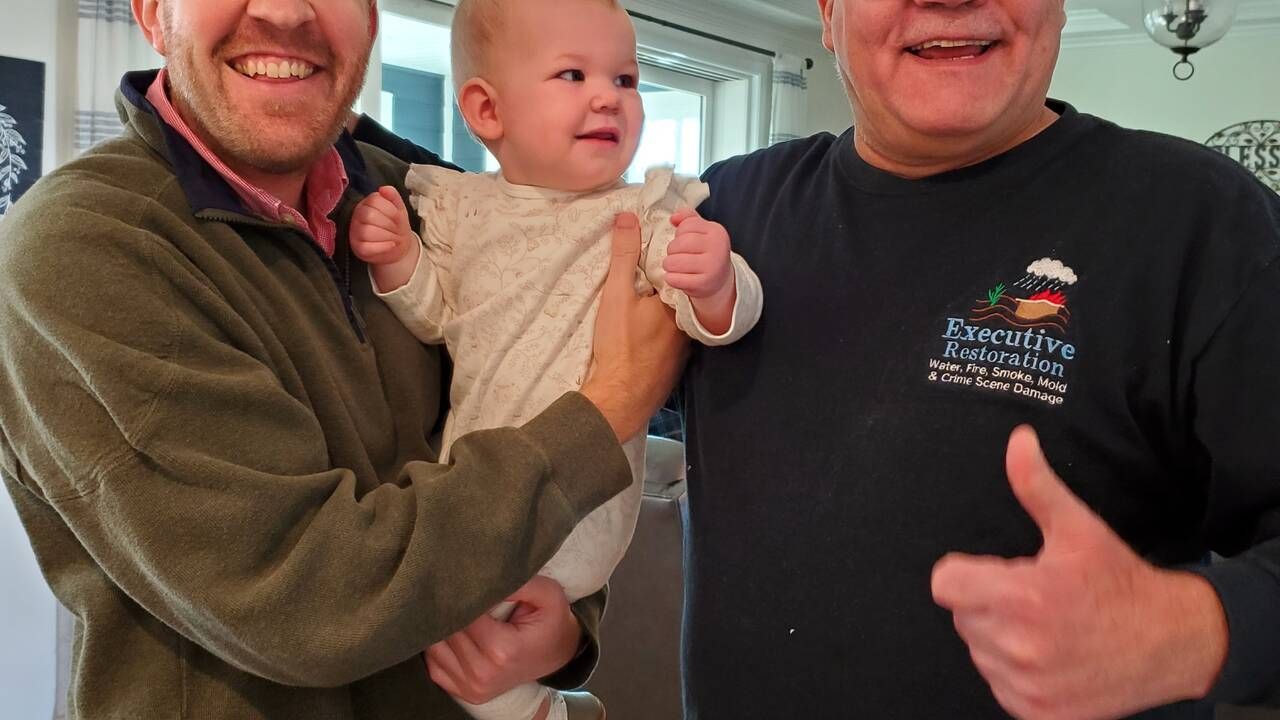
What do you know about Glutathione? What is Glutathione? Did you know that your body creates glutathione but the older we get, the more we typically could use to help our body run better and be cleaner as well as help us with aches and pains that we all can suffer, along our journey of life. Web MD states that Glutathione is a substance that is made from amino acids glycine, cysteine, and glutamic acid. It is producd by the liver and and involved in many body processes. It is also involved in tissue building and repair, making chemicals and proteins, that are needed in the body and in the immune system function. This is an entire quote from Web MD. Did you know that Glutathione is: antioxident, works to help with inflamation, detoxifier of each cell, can rid heavy metals from the body, is a major protector of our immune system, helps with cardiovasular issues, is the bodies first line of protection against environmental chemicals and toxins, counter acts chemical poisioning, removes free radicals from the body, removes heavy metals from the body, can control inflamation, can increase energy, can slow down the aging process, can reduce joint and muscle discomfort, can strengthen the immune system, works with other vitamins that you take for the body and gives you that extra push to help distribute vitamins to your body, can detoxify the liver and cells, can improve brain fog and clarity, can help with anxiety and stress, can help with better performance of organs of the body as well as clean up all organs of the body. Yes, your skin is an organ. Wink. Below, is my experience with it. My name is David Snell. Back in June of 2022, I was introduced to Glutathoine by a man by the name of Ronen Brown, out of Las Vegas, Nevada. I bought 2 bottles the first month. 2 bottles the second month, 7 bottles the third month, 7 bottles the fourth month and 50 bottles the fifth month. Upon first intoducing the bottle to my body by mouth and swishing it into my mouth, I noticed a warming sensation going down my right leg. My right leg had issues with pain and suffering for many years and so had my back. I gargled and swished my mouth with this product and within days, I was discovering my right leg and back was feeling so much better. I also have been going to a Chiropractor for some 4 years now and getting an adjustment every month from and I found out by applying this product to my mouth and going to my Chiropractor that both of these things were helping my body heal better and quicker. In essence, it is helping my body with aches and pains. Another thing that I noticed was that my energy level had increased, I currently have more energy as a 62 year old than I could ever imagine. I feel like the energizer bunny and it has really been beneficial to me as a owner of a small busienss since 1987 called www.ExecutiveRestoration.com The other thing I noticed about this product is that I sleep better and my sleep is a much deeper sleep than I have ever experienced with any product so far that I have ever been introduced too. I also have to cut my finger nails twice a week, using this product in liquid form. Circulation issues. I noticed that when I went outside that my hands and feet were not getting cold, as the prior year and I found out that this Glutathoine was assisting my body with better circulation and my body was much happier with better circulation. As some of you know, my passion is all things Mold related as well as all things Water Damage related. Since, I have been in business, I have been exposed to so much Water Damage and Mold Inspection and Mold Removal concerns for my clients. One of the best ways I can describe this bottle is that this bottle works like detox in a bottle and this product has helped me Detox my body of toxins that my body. We need to rid the body of toxins and since I have been around so much Mold for so many years performing Certified Mold Inspections and Certified Mold Removial, this has been an experience that has cleaned up my body in so many ways. It is also been very helpful of detoxing my body from so many years of drinking alcohol. I did give up all beer, wine and mixed drinks some five years ago though and I am much happier and more financially rewarded not spending my money on any more alcohol. It feels good to be without and not partake in any more beer, wine or mixed drinks. My body sings without the consumption of alcohol and I am able to make better decisions as well as have better control of what I say and do. Giving up all alcohol that I used to drink was one of the best things, I ever did as a man and business owner. Consuming the product has also given me better taste and smell as well as cleaner blood and better blood flow to organs of my body as well as giving me better mobility and better motion of my arms and legs. Better Bowel Movements. I typically have 3 to 4 per day so this product has helped me rid my body of waste and processes it to get it out of my body. Everyone needs at least 1 Bowel Movement per day and to say that I have 3 to 4 per day is an extra bonus to release unwanted toxins from my body. I have also noticed that my bowel movements are solid, where as before they were loose or runny. I prefer the solid movements and I prefer being healthier that I used to be. Did you know that if you take prescription drugs, that this can deplete your Glutathoine levels in your body? Did you also know that pain medication also can deplete your Glutathoine levels? Did you also know that smoking can deplete your Glutathoine levels? So, if you take pain killers or you smoke or you take prescription medication, you might want to consider keeping your Glutathoine levels up. Some of the ways that I use Glutathoine. Gargle and swish with it and then swallow, For better performance, leave product in my mouth for at least 5 minutes. Spray the roof of the mouth and all sides of the mouth and under tongue and on top of tonue. I like to spray a couple times per day. Spray your nose with a nose misting sprayer. Nasal Spray. Spray the ears. Colon cleansing. Nebulizer. Breath in product using Nebulizer. Skin isues or healing issues with cuts. Eye cleansing. Spray on cuts for quicker healing. I have been on this product since June of this year. 2022. Does it help me? YES! Absolutely! Can it help you? YES! Absolutely! I am sharing my experience about Glutathione, to help others and how it has helped me. I have had only positive results to and with my body. Photo is being provided by Inspector David Snell, who is the owner and operator of Executive Restoration. In business since 1987. The photo is of my nephew, Adam Snell and daughters Janie Snell and David Snell on right, in black shirt. David Snell Certified Mold Inspector and Remediator In business since 1987. Office : 704-545-0098 Cell phone with texting 704-905-9152

Have you ever heard the expression, make noise to your food, as you eat it? When I used to live in South Korea. It was proper to make noise as you ate, your food. Whether it was grunting or even expelling wind if the food was good. This was very common. This was done to show the host, that the food is or was good. Can you imagine? In America, it is considered just plain rude to make noise when you eat food. Why is it rude to make noises in America, while eating food but not considered rude in South Korea? It has to do with culture. How many of you like or love to cook? If so, what do you like preparing? Please post one or more of your dishes, if you like. The photo above is a dish of New York Strip Steak and spuds, with veggies on the side. I also added garlic and basil to the dish with Celtic salt. It was absolutely YUMMY in my tummy. The meat was cooked on my grill with a lot of love. Photo was taken by www.ExecutiveRestoration.com David Snell. David Snell is a certified Mold Inspector and Mold Remediator and Water Damage and structural dry out specialist. David has been in the business since 1987 and welcomes your phone call if he can assist you with questions to help you.
What Have I Done, To Improve My Life? What have you done to improve your life?I was talking to a friend of mine, who has recently challenged me to write, about what have I done to improve my life? I have been thinking and thinking about this and given it much thought, so here goes.I am also writing this to be totally open about what I have changed in my life for the good. Eating healthy. I care about what I eat and what I drink now. I am finding out that your health and my health is very important or at least, it should be. I cook every day. I cook homemade meals. I rarely eat out, unless I have to. I cook food from scratch and things that are healthy for me. No more fast food for me. I only eat out if I am away from home and I have to eat out and I am on the go.Drink healthy fluids. The days of drinking wine, drinking beer and drinking mixed drinks, are over for me. I am not judging anyone else for partaking in these fluids, but for me, I am done with them. I have been clean for 4 years and six months now and my body is clean and it will stay that way.Taking vitamins/supplements. Figure out what kind of vitamins, your body lacks and start taking the vitamins your body needs. My body was lacking iodine, magnesium and so many others. I feel like a new person taking the vitamins and supplements that my body has lacked for so long. Being real with others. Stop trying to be something that you are not. I used to make myself out to be bigger than I was. I confess. I found out that I do not need to do this anymore. No need to impress anyone. They will find out soon enough on who I am and who you are, soon enough. Time reveals all. You and I just need to be who we are. No need to try to be or act like anyone else. Wink. When someone takes advantage of you. Move on. I am not saying that you have to be friends with that person but be kind and respectful. There is no need to try to get even with him or her. Life has a way of equalizing things. Life has a way of leveling the playing field and the truth has a way of always coming out. Learn from your mistakes. You will repeat your mistakes, over and over again, until you learn from your mistake. Do not look at your mistake as something, that you can not learn from. We all make mistakes but we all choose to either grow or not grow. So, you made a bad business decision. Learn from it and never repeat it again! Challenges. Daily, weekly, monthly and yearly challenges. Set challenges to help yourself grow. If you do not challenge yourself, how do hope to grow?Help one another along each other's journey in life. We can all do much more than we are doing now. Can we not? Call one another and get to know one another. Pick up the phone or meet one another and show one another kindness and that you will assist one another.Stop keeping score! People make mistakes. You make mistakes. I make mistakes. Ask for forgiveness from others, when you make a mistake. It takes a real person to ask for forgiveness. Whether the person forgives you is up to him or her.Take a shower or bath daily and clean up your kitchen daily. Even if you do not feel like it. It will make you feel better and your kitchen and your body will love you for it and you will feel so much better and you will definitely smell better. Be informative and stop selling but educate and inform others. Stop being or acting so desperate.Say thank you or no thank you. Say yes mam or no mam and be appreciative of what others do for you. Stop taking people for granted, in what he or she does for you. None of us are entitled to anything that someone does for us. Hug someone at least once a day. You will find, that this does wonders for you. Smile daily. Be positive and have a great attitude. Our attitude in life determines our altitude and how high or low, we will fly in life.Treat others, the way you want to be treated. Be kind one to another. If you treat others poorly or you are disrespectful to him or her, do you really expect others to be respectful of you?Keep a daily journal of what goes on daily or find an application on your phone. I have kept a daily diary/journal since 1978 and it has really helped keep me more organized in life.Drink clean water every day. I try to drink distilled water every day and at least half a gallon. Remember, that there are different kinds of water. Find the water that works for you. I am in no way trying to sell you but just sharing what has helped me in life and trying to be real as well as help others, along their journey.If your life is a mess, clean it up! Be open to change. Be open to trying new things if something is not working for you. Go at it, at a different direction, to achieve the goal of progressing, if that is what you want.The photo is of a BLT (Bacon, Lettuce, Tomato) is courtesy of David Snell, who is the owner and operator of Executive Restoration since 1987. www.gotmoldwehavethecure.com Certified Mold Inspections,Fire | Water | Mold Removal Repair Experts 704-545-0098 Office Land Line | 704-905-9152 Cell phone with texting Executive Restoration offers: Certified Mold Inspections Certified Mold Removal Building Moisture Scans www.ExecutiveRestoration.com Sincerely, Inspector David Snell
After completion of a Mold Inspection in Troy, North Carolina, the client and I proceeded to the dock area to look at God's beauty, and the above photo was taken to share with others. There were many things that went through my mind.What should I give thanks for? Why are so many wanting more? Why are people not very happy about life when we have so much to be thankful for? For myself, I used to be all about money and I used to be all about work. I have realized that life is so short and to be thankful and give thanks for all things. Not just the big things either. Life brings us many challenges and we can take the challenges and grow from them or remain unchanged and choose not to learn from them. Perhaps this is why we are given challenges and struggles in life. Sometimes we are presented with problems to humble us. For myself, I am thankful I have been humbled in life, and perhaps we all need to be humbled in life. Sometimes, we do not appreciate or are not thankful for all the things that life has given to us. Life has certainly offered me my fair share of struggles but our struggles can strengthen us or defeat us. We can look at problems as something bad or we can look at problems as something good. How do you look at your problems or struggles? Do you look at them as challenges or do you look at your problems as something bad? Perhaps, we all need to reflect on problems as challenges and work on being better people. I know that I have had my share of challenges and they have not been easy but overcoming the challenges has been so helpful to me and has formed me into the person I am today.Is it about perception and really how we choose to view things? I know, when I was bedridden from back issues, that I had so much time to reflect on so many things. Initially, it made me angry and made me feel sorry for myself but this was not constructive at all. Finally, I stopped feeling sorry for myself and did some thing about my back issue. I certainly grew and became more thankful for the times that did not have poor health.https://maps.app.goo.gl/rp4dMv@GkXbDERee9My name is David Snell and I love sharing my heart and thoughts with others.www.gotmoldwehavethecure.comP.S. I am learning to never take anything for granted.David Snell Certified Mold Inspections,Fire | Water | Mold Removal Repair Experts 704-545-0098 Office Land Line | 704-905-9152 Cell phone with texting Executive Restoration offers: Certified Mold Inspections Certified Mold Removal Building Moisture Scans www.ExecutiveRestoration.com Sincerely, Inspector David Snell
Do you know, what is in your tap water?Do you know, how safe your tap water is?Go to www.ewg.orgThen go to the three lines and look for tap water data base.Then type in the zip code that you are in or that you want to check out.I was absolutely shocked, of what is in my tap water. Now, I do have a filter in place that filters the water, before it comes into my house. Do we take cleanliness for granted? I certainly like clean but I had no idea that tap water, had so many chemicals in it. Check out, your zip code for yourself. I would like to suggest to home buyers, that they have the water in the home tested, before the purchase. No, I do not do water testing either. If you do not have the water tested in the home, you could simply buy a water filtering system for the entire house.If your tap water is polluted or contaminated, how does the skin deal with this? These are just some questions to think about.Again, I do not offer water testing nor do I sell water filtering units. David SnellExecutive Restorationwww.gotmoldwehavethecure.comScreen shot is courtesy of EWG.ORG
Certified Mold Inspections,Fire | Water | Mold Removal Repair Experts
704-545-0098 Office Land Line | 704-905-9152 Cell phone with texting
Executive Restoration offers:
Certified Mold Inspections
Certified Mold Removal
Building Moisture Scans
www.ExecutiveRestoration.com
Sincerely,
Inspector David Snell
How many people, do you think, wash their fruits and vegtables, before consuming them?I know quite a number of people, who do not bother to wash their fruits and vegetables, before consuming them! Nasty, huh?Another thing. Just because the packaging states, that the fruit or veggies or salad is prewashed, you might want to wash it anyway, if you want peace of mind and you want to make good and sure it is clean, before it goes down the hatch.So, let us get started. Some of the things, you will need are: 1. white distilled vinegar.2. baking soda3. dish washing liquid soap. I use Dawn.4. a sink or bucket or container to put your ingredients in. 5. warm water. 6. add your veggies and fruits to the container or sink and mix everything up, that I have listed above. I like to add in my ingredients first and then just kick back and watch the bubbling action as the above products, started to work on my fruits and vegetables and start the cleaning process. Do not be concerned about the bubbling action. This is normal. 7. let your fruits or veggies soak for at least 30 minutes. I have let mine sit for at least one hour, on ocasions.8. after the soaking process, rinse all your fruits and veggies with cool water. I would suggest soaking again in clean fresh water and then rinsing.9. a squeeze or two of lime juice or lemon juice.I have performed this procedure for years. Do not perform this if you are not interested in clean fruits and veggies. Or, you trust the farmer or grocery store. Think of all the chemicals and dirt, that many people eat, who do not clean there veggies or fruits before consuming. Wink. My name is David Snell and I love cooking and baking. I cook dishes from all over the world, since I have lived and traveled, all over the world. Clean food is important to me and so is healthy food. I rarely go out to eat anymore because I got sick as well as worms, so as you can see, I want things clean. Detoxing from worms and parasites will be in a future article so stay tuned. Lol. You never know, what you are eating in restaurants. We never know, what is going on in the kitchen, do we?I have been in business since 1987 and I enjoy writing to educate and inform. I am not here to sell or try to sell.Sincerely, David Snellwww.gotmoldwehavethecure.com704-545-0098Yes, this is really the water, after cleaning my fruits and veggies. Of course, I threw the dirty water away. Wink. Certified Mold Inspections,Fire | Water | Mold Removal Repair Experts 704-545-0098 Office Land Line | 704-905-9152 Cell phone with texting Executive Restoration offers: Certified Mold Inspections Certified Mold Removal Building Moisture Scans www.ExecutiveRestoration.com Sincerely, Inspector David Snell
Life can be about relationships but not all relationships, are healthy and not all relationships are worth having!Have you ever been in any kind of relationship that was not healthy or is not healthy? Did you stay in it? Did you leave it? I see a lot of people in relationships that are just not healthy. Have you ever wondered why people stay in relationships, that are not healthy or even safe? Do people stay in relationships out of security? Do they stay in relationships out of fear or financial reasons? People stay in relationships for many reasons. Some of the reasons, people stay in them, are quite shocking to me. How many reasons can you list, why do some folks stay in relationships, even if they happen to be unhealthy? Are you in any kind of relationship, that is unhealthy? If you are, work on doing something about it. No, I am not trying to be a therapist to anyone but think about what you are doing and what you are in and determine if any relationship that you are in, are healthy or unhealthy. I see so many people who are together and I wonder, how they really do behind closed doors if they are creating a scene and fighting in public. Why are so many in relationships, that are not happy?In the past 4 years, I have walked away from quite a few unhealthy relationships. I wish them well but I choose to not be around him or her anymore, for various reasons. When we know that someone is unhealthy for us and unhealthy to us, you want to either limit your exposure to him or her or just stay away from this person or persons, altogether!Are some relationships, really worth having? Stay away from unhealthy people at all costs or at least, limit your exposure to him or her. Not everyone is healthy to be around. Kind of like Mold and Fungus. Mold and Fungus can be good and bad. They both have there good, bad and ugly side to them. Life is important and so is your time. Stay away from Toxic People! Stay away from people who do not build you up and who will be supportive of you. Sure, life can be messy as well as some relationships but learn to stay away from relationships that are not healthy and that are toxic to you. It might be hard to stay away from those relationships at first but in time, you will see how important it is and it will be for you, to do this. Your sanity and your emotional health, should be very important to you. Is it?Relationships are important but toxic or unhealthy relationships can destroy people. Learn to spot the toxic people in your life and stay away from unhealthy people. My name is David Snell. I am the owner of a company called Executive Restoration. Mold Removal, happens to be one of my passions of life. www.gotmoldwehavethecure.comwww.gotmoldwehavethecure.comI got the above photo from Power of Positivity, and from Face Book.www.GotMoldWeHaveTheCure.Com Certified Mold Inspections,Fire | Water | Mold Removal Repair Experts 704-545-0098 Office Land Line | 704-905-9152 Cell phone with texting Executive Restoration offers: Certified Mold Inspections Certified Mold Removal Building Moisture Scans www.ExecutiveRestoration.com Sincerely, Inspector David Snell